Why Your Report Template is the First Step to an A+

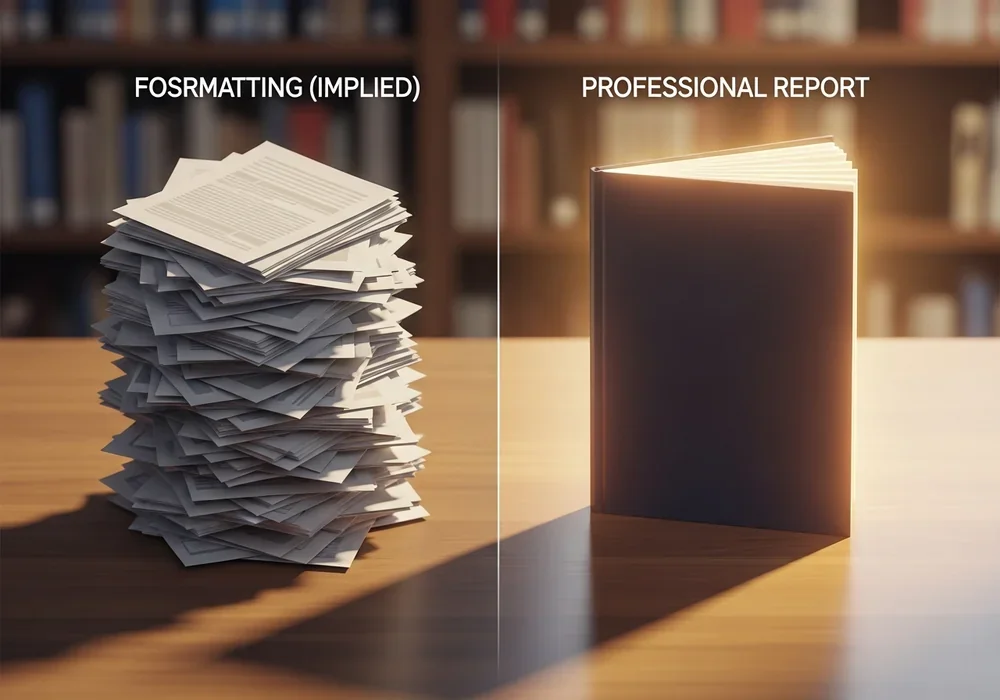
Ever wondered why some students get higher marks even when their content seems similar to yours? Honestly, it often comes down to the visual hierarchy and professional feel of the document. A well-structured performance assessment report template acts as a silent advocate for your hard work. It tells the teacher, “I am organized, I value this assignment, and I have followed a logical path.”
When a teacher opens a file and sees a messy layout with inconsistent fonts, they subconsciously prepare for a lower-quality argument. On the flip side, a clean, standardized format allows the grader to focus entirely on your brilliant insights. Think of your template as the packaging of a premium product; the quality inside matters, but the presentation gets you through the door.
In my ten years of reviewing academic content, I’ve noticed that the most successful reports share a common DNA. They use clear headings, ample white space, and a predictable flow. This doesn’t just make it look pretty—it makes it readable. If a teacher can find your core argument in three seconds, you’re already halfway to an A.
Download Your Free Performance Assessment Report Template (HWP & Word)
To save you the headache of fighting with margins and line spacing, I’ve prepared two professional versions of a performance assessment report template. Whether you prefer Hancom Office (HWP) or Microsoft Word, these files are pre-formatted with the ideal font sizes, margins, and section headings required by most high schools and universities.
[📥 Download HWP Performance Assessment Report Template]
[📥 Download Word Performance Assessment Report Template]
These templates are optimized for both scientific inquiry and social science essays. They include placeholders for your name, student ID, subject, and date. Using a standardized performance assessment report template ensures you don’t miss essential sections like the table of contents or the bibliography, which are often worth 10-15% of your total grade.
The 3-Step Logical Structure That Graders Can’t Ignore
Structure is the backbone of any academic writing. If your thoughts are scattered, your grade will be too. Most teachers use a rubric that specifically looks for a coherent flow from the beginning to the end. Here is how a high-scoring report should be structured:
- Introduction: The ‘Why’ and ‘What’. Why are you doing this, and what do you hope to find?
- Body: The ‘How’ and ‘Results’. What steps did you take, and what actually happened?
- Conclusion & Reflection: The ‘So What?’. What did we learn, and how did this change your perspective?
By sticking to this performance assessment report template logic, you ensure that your narrative never gets lost. Teachers love it when they can see a clear link between your initial motivation and your final conclusion. It shows that you didn’t just copy-paste facts, but actually engaged in a process of discovery.
| Feature | Basic Report (B-Grade) | Top-Tier Report (A-Grade) |
|---|---|---|
| Structure | Randomly ordered paragraphs | Clear Introduction-Body-Conclusion |
| Data | Descriptive text only | Tables, Charts, and Analyzed Data |
| Reflection | “It was fun and I learned a lot.” | Critical analysis of personal growth |
| Citations | URL links only | Standardized APA/MLA format |
Mastering the Introduction: Defining Your Motivation and Goals
The introduction is your first chance to grab the teacher’s attention. Instead of starting with a dry fact, try explaining the personal spark that led you to the topic. Did a news article bother you? Did a specific classroom discussion leave you with unanswered questions? This is called the ‘Inquiry Motivation’.
Here’s a tip: Be specific about your goals. Instead of saying “I want to learn about climate change,” try “I aim to analyze the correlation between local temperature rises and the decrease in honeybee populations in our province.” This level of precision shows that you have a clear plan. A professional performance assessment report template always reserves a prominent spot for these objectives right at the start.
Writing Tip: Use the phrase “The purpose of this report is to…” to ensure your goal is impossible to miss. It helps the grader check off the ‘Clarity of Purpose’ box in their rubric immediately.
The Body Paragraphs: How to Present Data Like a Professional
The body is where the heavy lifting happens. This is where you detail your experiment, your survey results, or your literature review. One common mistake students make is writing long, dense blocks of text. Please, don’t do that. Use subheadings to break down different phases of your research.
If you conducted an experiment, your performance assessment report template should clearly separate the ‘Methods’ from the ‘Results’. Use bullet points for materials and numbered lists for procedures. When it comes to the data itself, a simple table or a neat bar chart is worth a thousand words. It shows that you know how to synthesize information, not just collect it.
Remember to stay objective in this section. Avoid using “I think” or “I feel” here. Stick to the facts: “The data indicates…” or “The observed outcome was…”. Save your personal feelings for the next section, where they actually belong and carry more weight.
Simple vs. Deep Reflection: The Secret to High Emotional Intelligence Scores
This is the section that separates the leaders from the pack. Most students treat the ‘Reflection’ or ‘Impression’ part as an afterthought. They write things like “I learned a lot about science and it was interesting.” That is a ‘Simple Reflection,’ and it rarely earns full marks.
To get an A, you need a ‘Deep Reflection’. Connect what you learned to your future career, other subjects, or real-world problems. Show the teacher that this assignment changed your way of thinking. Here is a comparison to help you understand the difference:
- Simple Reflection: “I learned how to use a microscope and saw many bacteria. It was a good experience for my biology grade.”
- Deep Reflection: “While observing bacteria under the microscope, I realized how much of our health depends on an invisible ecosystem. This sparked a new interest in microbiology, leading me to research how urban pollution might be altering these microbial balances in our local water supply.”
See the difference? The second example shows curiosity, critical thinking, and a connection to a broader context. That is exactly what evaluators are looking for in a performance assessment report template.
Citing Sources Properly: Avoiding the Plagiarism Trap
Nothing ruins a great report faster than poor citations. Even if you didn’t mean to, failing to credit your sources is a serious academic offense. Moreover, showing a diverse range of sources—books, academic journals, and reputable news sites—proves that you did thorough research.
In your performance assessment report template, dedicate the final page to a ‘References’ or ‘Bibliography’ section. Follow a standard format like APA or MLA. For example:
- Book: Author, A. A. (Year). Title of work. Publisher.
- Website: Author, A. A. (Year, Month Day). Title of article. Website Name. URL
- News: Journalist Name. (Year). “Article Title.” Newspaper Name.
Actually, citing your sources also adds “authority” to your own writing. When you back up your claims with expert data, your arguments become much harder to dismiss.
The Final 5-Minute Checklist Before You Hit Print
Before you submit your work, take a breath and do a final sweep. Even the best performance assessment report template can’t save you from a typo in the title or a missing page number. Here is the ultimate checklist for a perfect submission:
- Check the Rubric: Did you cover every single point the teacher asked for?
- Spelling & Grammar: Run a spell-check, but also read it aloud. Your ears often catch mistakes your eyes miss.
- Formatting: Are the headings consistent? Is the line spacing uniform?
- Visuals: Do all your tables and charts have captions (e.g., Figure 1: Growth Rate)?
- The “So What?” Test: Does your conclusion actually answer the question you asked in the introduction?
If you can check all these boxes, you can hit that ‘Submit’ button with total confidence. You haven’t just finished a task; you’ve produced a professional document that reflects your true potential. Good luck with your performance assessment!
자주 묻는 질문 (FAQ)
A: While every section matters, the logical connection between your ‘Motivation’ and your ‘Reflection’ is what teachers value most. It shows the process of learning, not just the result.
Q2: Can I use images from the internet in my report?
A: Yes, but you must cite the source. It is always better to use your own photos or charts if you conducted an experiment or survey.
Q3: How long should the reflection section be?
A: Usually, 1-2 well-developed paragraphs are enough. Quality matters more than quantity—focus on deep insights rather than long descriptions.
Q4: Why should I use a template instead of just starting a new file?
A: A performance assessment report template ensures you don’t forget technical requirements like margins and font sizes, which are often part of the grading criteria.
자주 묻는 질문
What is the most important part of a performance assessment report?
While every section matters, the logical connection between your ‘Motivation’ and your ‘Reflection’ is what teachers value most. It shows the process of learning, not just the result.
Can I use images from the internet in my report?
Yes, but you must cite the source. It is always better to use your own photos or charts if you conducted an experiment or survey.
How long should the reflection section be?
Usually, 1-2 well-developed paragraphs are enough. Quality matters more than quantity—focus on deep insights rather than long descriptions.

It’s James Wilson, your guide at “Acknowledgment Templates.” I’ve dived into the intricacies of crafting the perfect acknowledgment sections for your project, research paper, or thesis. With a wealth of experience in this field, I’m here to help you express gratitude and appreciation effectively. Join me on this journey, and let’s make your acknowledgment section shine!