Why your acknowledgement section is more than just a formality
You’ve finally reached the end. The data is analyzed, the literature review is polished, and the conclusion is solid. But there is one section left that feels surprisingly difficult to write. It’s the graduation thesis acknowledgement.
Many students treat this as an afterthought. They rush through it in the final hours before printing. Honestly, that’s a missed opportunity. This section is often the most-read part of any thesis. It provides a rare glimpse into the human effort behind the academic rigor.
Think of it as your professional legacy. It’s where you transition from being a student to a recognized scholar. This guide will help you navigate the delicate balance of professional respect and personal warmth.
The hidden power of the last few pages
Why do people read acknowledgements first? It’s simple. They want to see the network that supported the work. A well-written acknowledgement demonstrates your maturity as a researcher. It shows you understand that no great work is done in isolation.
The unspoken hierarchy: Who should you thank first?
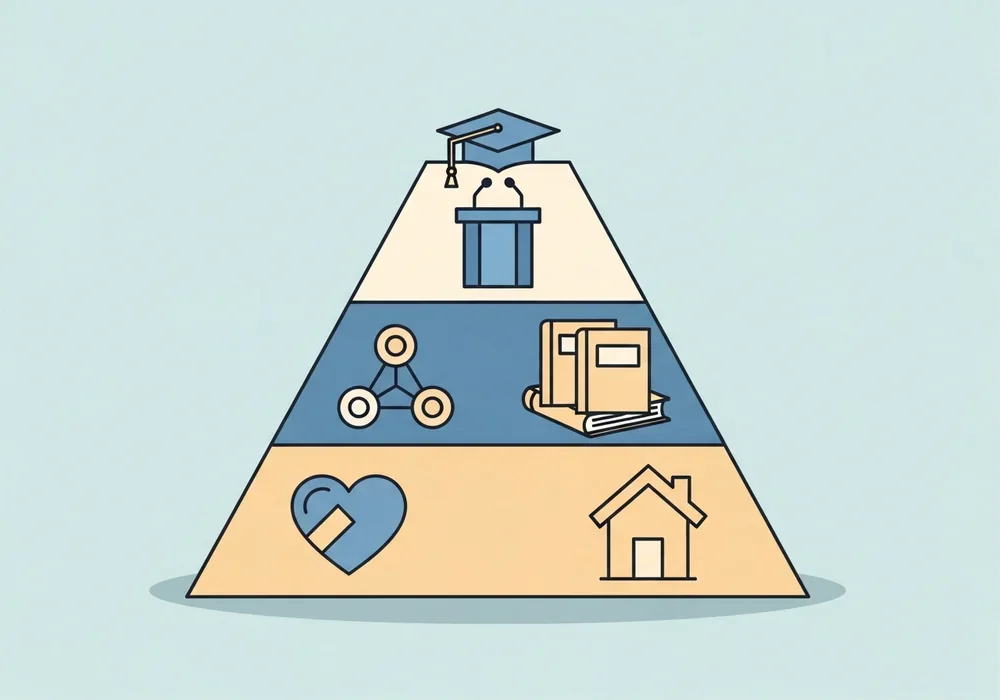
Have you ever wondered if there’s a ‘correct’ order for saying thank you? In academia, there definitely is. Following a standard hierarchy ensures you don’t accidentally offend someone important. It keeps your document organized and professional.
Mastering the order of gratitude
Generally, you should move from the professional to the personal. Start with those who had the most direct impact on the academic content. Then, move toward those who provided the emotional or financial stability to finish.
- Level 1: Your primary supervisor or advisor.
- Level 2: Thesis committee members and departmental faculty.
- Level 3: Funding bodies, institutions, or scholarship providers.
- Level 4: Lab mates, research assistants, and academic peers.
- Level 5: Family, partners, and close friends.
Crafting the perfect tribute to your advisor and committee
Your advisor is the most critical person in this section. They provided the roadmap for your success. Even if your relationship was strictly professional, your graduation thesis acknowledgement must reflect deep respect for their time and expertise.
Templates for academic guidance
Option 1: The Formal Professional (Ideal for Ph.D. candidates)
“I would like to express my deepest gratitude to my advisor, Professor [Name], for [his/her/their] invaluable guidance and unwavering support throughout this journey. [His/Her/Their] profound insights and high standards for excellence have shaped me into the researcher I am today. I am also grateful to the committee members, [Name] and [Name], for their critical feedback which greatly improved the quality of this work.”
Option 2: Focus on Mentorship (Great for Master’s students)
“I am sincerely grateful to Professor [Name] for the opportunity to work under [his/her/their] supervision. Beyond the academic guidance, I appreciate the patience and encouragement [he/she/they] showed during the most challenging phases of my research. [His/Her/Their] mentorship was a cornerstone of my graduate experience.”
Writing Point: Mention a specific quality, like “keen eye for detail” or “patience during data collection.” This makes the thanks feel authentic rather than a copy-paste job.
Showing appreciation to the lab mates and colleagues who stayed late
Academia can be lonely, but your peers make it bearable. These are the people who helped you troubleshoot code at 2 AM or shared a coffee when the results weren’t coming out right. Your graduation thesis acknowledgement should recognize this camaraderie.
Templates for research collaborators
Option 1: The Team-Oriented Approach
“To my colleagues in the [Name of Lab/Department], thank you for creating such a stimulating environment. Specifically, I want to thank [Name] for [his/her/their] assistance with [specific task, e.g., statistical analysis]. The many hours we spent debating [Topic] were instrumental in refining my ideas.”
Option 2: The Peer Support Approach
“I am indebted to my fellow graduate students, especially [Name] and [Name]. Our shared struggles and successes made this journey much more rewarding. Thank you for the countless discussions and for always being ready to lend a helping hand.”
Heartfelt words for the family and friends who kept you going
This is where you can let your guard down a little. While the rest of the thesis is objective, this part is about the heart. Your family didn’t necessarily understand your p-values, but they understood your stress. They deserve a place in your graduation thesis acknowledgement.
Templates for personal support
Option 1: For Parents/Guardians
“Finally, I would like to dedicate this work to my parents, [Name] and [Name]. Their unconditional love and belief in my potential have been my greatest motivation. I am eternally grateful for the sacrifices they made to allow me to pursue my dreams.”
Option 2: For a Spouse or Partner
“To my [husband/wife/partner], [Name], thank you for your incredible patience and for being my rock. You handled the long hours and my endless talk about [Thesis Topic] with grace. This achievement belongs to both of us.”
Master’s vs. Ph.D.: How the weight of gratitude shifts
The tone of a graduation thesis acknowledgement often changes based on the degree. A Ph.D. is a marathon, often spanning half a decade. A Master’s is a sprint. Naturally, the depth of the thank-you reflects this time commitment.
| Feature | Master’s Acknowledgement | Ph.D. Acknowledgement |
|---|---|---|
| Length | Typically 0.5 to 1 page. | Often 1 to 2 pages. |
| Tone | Professional and concise. | Reflective and deeply personal. |
| Scope | Focuses on immediate help. | Recognizes long-term intellectual growth. |
| Funding | Mentioned if applicable. | Mandatory to mention grants/fellowships. |
3 common mistakes that can ruin your professional image
Even though this section is personal, it is still part of a formal document. Avoid these pitfalls to keep your graduation thesis acknowledgement polished and respectable.
- Over-sharing personal drama: Keep it positive. Don’t use this space to vent about a difficult advisor or a breakup.
- Forgetting the funding: If a specific grant or university scholarship paid for your research, you MUST mention them. It’s often a legal requirement.
- In-jokes and slang: While you can be warm, avoid language that only you and your friends understand. It can look unprofessional to external reviewers.
Here is a tip: Always double-check the spelling of names. Misspelling your advisor’s name is the ultimate academic faux pas!
Conclusion
Your graduation thesis acknowledgement is the emotional heart of your academic work. By following the hierarchy of gratitude and using structured templates, you can ensure everyone feels valued. Remember, this is your chance to show the world the community that helped you succeed.
- Follow the hierarchy: Academic -> Peers -> Family.
- Keep the tone professional but sincere.
- Always proofread names and institutional titles.
Now that you have the templates, it’s time to write yours. Which person was most instrumental in your journey? Start with them, and the words will flow naturally.
자주 묻는 질문
Can I include personal jokes in my acknowledgement?
It is best to keep jokes very subtle or avoid them entirely. While a small lighthearted comment is okay for peers, remember that your thesis is a permanent professional record that will be read by future employers and scholars.
What should I do if I forgot to thank someone important?
If the thesis hasn’t been printed yet, add them immediately. If it has been submitted to the library, you cannot change the digital version, but you can mention them in your oral defense or send them a personal note with a copy of the thesis.
How long should the acknowledgement section be?
For a Master’s thesis, one page is usually the limit. For a Ph.D. dissertation, you can go up to two pages if you have a large committee and many funding sources to acknowledge.

It’s James Wilson, your guide at “Acknowledgment Templates.” I’ve dived into the intricacies of crafting the perfect acknowledgment sections for your project, research paper, or thesis. With a wealth of experience in this field, I’m here to help you express gratitude and appreciation effectively. Join me on this journey, and let’s make your acknowledgment section shine!